Research Article | | Peer-Reviewed

Effect of Perceived Social Support and Psychological Resilience on Mental Well-Being Among University Students

Received: 22 August 2025     Accepted: 15 September 2025     Published: 30 October 2025
Views:       Downloads:
Abstract

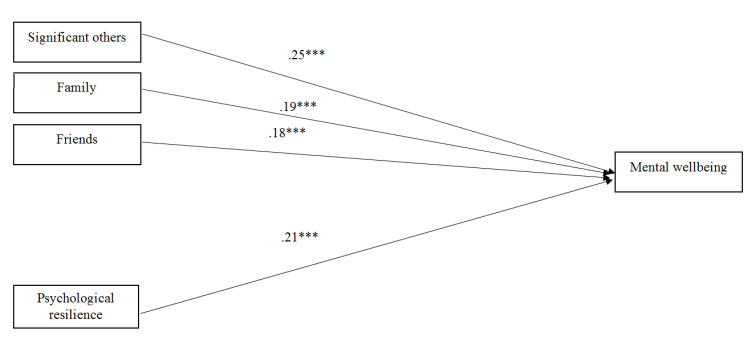
The purpose of the study is to find the differences between university students in terms of Perceived Social Support, Resilience, and Psychological Well-Being. Sample of the study size was consist of two hundred and fifty (N=252) students which consisted of both male (N=91) and female (N=161) students. The scales used are Multidimensional Scale of Perceived Social Support (MSPSS), Resilience scale (RS), and Warwick-Edinburgh Mental Well-being Scale (WEMWS) to find our three variables which are Perceived Social Support, Resilience, and Psychological Well-Being. According to the findings of the study all the three scales and its subscales showed very good reliability i.e. perceived social support (0.88), significant special (0.86), Family (0.79), Friends (0.83), Psychological resilience (0.50) and mental wellbeing (0.86). All the scales have very high and significant positive relationship with each other i.e. p<0.001. Regression analysis of the study shows that significant others (.25**), family (.19**) and friends (018**) from perceived social support (.21**) very highly significantly predicting mental wellbeing. Psychological Resilience is also highly predicting mental well-being so that the emerged model is a perfect predicting model. T test of the study analysis is non-significance because no value were significant i.e. p>0.001. Resilience, Social support and psychological well-being were high in university students.

Published in International Journal of Psychological and Brain Sciences (Volume 10, Issue 5)
DOI 10.11648/j.ijpbs.20251005.14
Page(s) 118-130
Creative Commons

This is an Open Access article, distributed under the terms of the Creative Commons Attribution 4.0 International License (http://creativecommons.org/licenses/by/4.0/), which permits unrestricted use, distribution and reproduction in any medium or format, provided the original work is properly cited.

Copyright

Copyright © The Author(s), 2025. Published by Science Publishing Group

Keywords

Warwick-Edinburgh Mental Well-Being Scale, Multidimensional Scale of Perceived Social Support, Resilience Scale, Number

1. Introduction
Single parenting is a very difficult and challenging task especially when dealing with teenage children where issue arises due to mismatch of demands from parents and teenagers. A close knitted, organized and supportive family and social environment can prove to have a strong impact on psychological well-being of teenagers. It can also have a significant association with teenagers’ ability to bounce back from the loss and deprivation of one parent. The present study aims to examine the differences among the university students in terms of perceived social support, resilience and psychological well-being.
Perceived social support positively correlates with psychological well-being. It means that less perceived social support brings less psychological well-being, poor adjustment, and increased vulnerability of mental illness. Similarly, resilience is negatively related with depression or low psychological well-being: adolescents who are having experience with increased resilience would consequently be less depressed .
1.1. Perceived Social Support
Perceived social support is the comforting belief that we have a network of people we can truly count on. This essential sense of security is most often provided by the close bonds we share with family, our friends, and other significant people in our lives . For a child, a parent's support is a vital anchor, offering guidance and encouragement that is fundamental to their development . This is especially true for teenagers, for whom a supportive family can be the foundation of their world. When a family suffers the profound loss of a parent, this critical support system is tragically fractured, leaving a deeply felt need for the stability and care it once provided deceased .
A parent's support acts as a vital anchor for a child, offering a profound sense of security and belonging that is fundamental to their well-being. This kind of social support isn't just comforting; it's a critical buffer for both physical and mental health. Extensive research across diverse cultures has consistently found that when children face adversity such as victimization or maltreatment a strong network of care can significantly lessen the symptoms of poor psychological health. This protective effect has been demonstrated in numerous studies, highlighting the universal power of supportive relationships in helping young people heal and thrive .
A strong network of social support is deeply connected to an individual's capacity for resilience. Resilience itself is the remarkable ability to adapt and thrive even when facing serious threats to healthy development. These threats, often called risk factors, are conditions that increase the likelihood of negative outcomes and problematic behaviors. Leading theorists in the field suggest that such risk factors can often be identified within the lives of children facing adversity, as well as in their family environments, community structures, and broader surroundings .
1.1.1. Types of Social Support
To better grasp how relationships sustain us, experts often categorize social support based on the essential functions it provides. Generally, we can break these functions down into four key types.
1.1.2. Emotional Support
Emotional support is the profound comfort we feel when someone truly hears and understands our struggles. It’s the reassurance that we are cared for, that we don't have to face our difficulties alone, and that someone is there to stand with us in stressful times. This kind of support provides a crucial sense of safety and belonging, helping us to feel grounded and resilient even when things are hard .
1.1.3. Esteem Support
This type of support comes from feeling respected and valued by others. It’s the reassurance that your ideas and feelings are not just heard, but accepted, and that your efforts are met with genuine encouragement. This validation is a powerful force, actively building a person's confidence and strengthening their sense of self-worth .
1.1.4. Instrumental Support
This support involves receiving direct, material assistance from one's social network during times of need. As researchers like have noted, it is the tangible provision of resources, such as money, services, or goods that helps to alleviate stress in a concrete way.
1.1.5. Informational Support
This is a form of support where people offer helpful information or practical suggestions to help someone navigate a tough situation. A classic example is when a friend recommends a home remedy for a cold or a doctor provides a treatment plan; both are acts of informal, supportive guidance.
1.1.6. Perceived and Received Social Support
It's crucial to understand that "social support" isn't a single, monolithic concept; its various forms must be considered separately to see how they truly help us. As pointed out, general offers of support don't always shield someone from stress—it's often a specific type of support that makes the real difference. This idea was explored by , who investigated how to match specific kinds of support to the specific problems people face.
Their research revealed that the effectiveness of support depends heavily on the nature of the stressor. For example, when coping with the loss of a friendship, emotional comfort and opportunities for social connection are far more critical than other forms of aid. Conversely, when dealing with a financial crisis, practical material assistance becomes the most valuable resource. Interestingly, they also found that sometimes the type of support matters more than who provides it, while in other situations, the source is the key factor.
Adding a layer of complexity, some research suggests that the support we actually receive and our general perception of being supported are closely linked , leading the terms to sometimes be used interchangeably. However, it's important to recognize that they are distinct concepts, each with its own unique impact on our well-being.
1.2. Resilience
Resilience is often described as our remarkable human capacity to not just endure hardship, but to adapt and grow from it . Some experts see it as the ability to preserve our emotional well-being through profound losses, like the death of a loved one. Others view it as an inner strength or mental toughness a personal quality that helps us weather life's storms. At its heart, every conception of resilience shares a common thread: it is the process of confronting difficulty , and, against the odds, emerging even stronger and more capable than before.
Resilience in children refers to when an individual doing things better than expected in the presence of risk or adverse experience. In resilience an individual experience some sort of risk or adversity that has been linked with poor outcomes, and the good performance of an individual is related or due to that risk or adversity by not showing that poor outcomes . Many researchers are working on the developmental stages of children’s and adolescent’s, they describe that resilience is a factor that enables children in risk or adverse circumstances to fight back and develop themselves as successful and well-adapted adults.
1.2.1. Resilience as a Trait or Capacity
When we try to measure human resilience, many approaches view it as a personal strength a quality we carry within us that can be understood by reflecting on our past. Some see this strength as a single, unified force, while others believe it's woven together from several different abilities and traits. Because of this, researchers have explored a wide range of personal qualities, considering them to be either the building blocks of resilience or the very foundation it grows from.
1.2.2. Protective Factors
At its heart, resilience is understood to grow from the personal and external resources we can call upon during hard times. These supports act as a toolkit for overcoming challenges, and they can take many different shapes. Often, research in this area concentrates on a single aspect of resilience, aiming to create strategies and interventions tailored to that specific level .
1.2.3. Individual Factors
This is the dimension of resilience that most captures the attention of psychologists. It explores the inner psychological and biological resources we draw upon to not just endure hardship, but to truly heal and find our footing again after trauma or significant setbacks. Researchers often focus on the unique personality traits and coping strategies—like those just discussed—that can act as a buffer, helping to determine why some people emerge from adversity with their well-being intact . The investigation can also widen to include how our physical health, thought patterns, and even the very structure and function of our brain respond to and manage stress.
1.2.4. Social Factors
Think of it as the safety net of close connections in your life. It's about having people—whether family, friends, or colleagues—you know you can truly count on to be there for you, both emotionally and practically, when times get tough. Studies have shown that this kind of reliable support is a powerful buffer, helping people navigate major life challenges like losing a job, going through a divorce, or dealing with a prolonged illness. Ultimately, true support blends heartfelt compassion with tangible help, creating a foundation that helps us withstand life's inevitable pressures note that “there is a growing consensus that social support can come from both work and non-work sources and that this support is primarily in the form of either emotional support (e.g., listening and providing empathy) or instrumental support (e.g., tangible assistance aimed at solving a problem).”
1.2.5. Community Factors
The idea of resilience has grown far beyond a personal trait; it's now a vital quality we look for in our very communities and nations. This broader view of resilience looks at the whole tapestry of a society its economy, its institutions, its environment, and its physical infrastructure to understand which places can best withstand and rebound from crises, whether a hurricane, an attack, or a financial recession. It's not just about having emergency services, for example, but about how well they communicate and work together when it matters most. And sometimes, true resilience comes from unexpected places. After Hurricane Katrina, companies like Wal-Mart became famous for delivering crucial supplies to cut-off areas faster than official government channels, thanks to their flexible contingency plans and ability to adapt on the fly. This shows that a community's strength is woven from every thread within it, not just its official institutions.
1.3. Psychological Well-Being
Psychological well-being is a rich and complex concept, woven from many different threads like playfulness, cheerfulness, resilience, optimism, and self-control that are valued across cultures . further showed that feelings of social support, self-esteem, positive emotions, and overall life satisfaction are also fundamental parts of feeling well, regardless of a person's age.
Essentially, psychological well-being acts as a universal signal of our inner readiness to see our social world as meaningful. While experts don't always agree on a single definition, this flexibility allows the concept to bridge different theories about how our minds work. Researchers can even study its individual components as indicators of overall health, which is a great help for empirical study.
Since the late 1950s, several models have tried to capture positive mental health. These frameworks highlight various elements, from cultural ideas of wellness to a personal sense of fulfillment and the ability to cope with life's challenges. In studying adolescents, this perspective has shifted the focus from just avoiding negative outcomes to actively promoting positive development and healthy functioning .
At its core, psychological well-being is widely understood as positive psychological functioning and experiencing life in a positive way . In this sense, it is a hallmark of positive mental health, though defining what "positive functioning" and "good experiences" truly are remains a topic of debate. This has led researchers to explore well-being through different lenses.
Notably expanded the view, arguing that true well-being includes both psychological and social facets . He proposed five vital social dimensions:
1) Social Acceptance: Holding a positive view of others and believing in their potential.
2) Social Actualization: Feeling that society is evolving positively and has the potential for growth.
3) Social Contribution: Believing that one’s own activities are valued by society and contribute to the greater good.
4) Social Coherence: Feeling interested in society and believing it is logical, predictable, and meaningful.
5) Social Integration: Experiencing a sense of belonging to a community, with shared common interests and support.
Thus, according to this approach, well-being is not just an internal state; it is deeply intertwined with our social world, both influencing and being influenced by the communities we belong to.
1.3.1. Factors Affecting Psychological Well-Being
However, there are relative information about specific indicators of wellness and how the relate to adolescent’s mental health .
1.3.2. Life Satisfaction
In recent years, life satisfaction has gained significant attention as a powerful indicator of overall well-being and positive functioning in young people . Research consistently shows that this sense of contentment is deeply intertwined with an adolescent's success, demonstrating a clear positive link to academic achievement . Furthermore, high levels of life satisfaction are connected to a host of positive social and emotional outcomes, acting as a protective factor against serious risks like suicide attempts and substance use , while also fostering stronger, healthier attachments with parents and peers . Together, these findings powerfully highlight how vital life satisfaction is for nurturing healthy adolescent development and paving the way for future success.
1.3.3. Social Support
For decades, the field of positive psychology has been built upon research into the positive emotions, traits, values, and institutions that help individuals thrive . Within this field, social support stands out as a particularly well-studied resource in the lives of children and adolescents. It is broadly understood as the essential physical and emotional comfort provided by one's family, friends, and other significant people . Consistently, research demonstrates that a lack of this crucial support is connected to a range of negative outcomes for young people, including difficulties with psychological well-being, social adjustment , academic performance , and physical health .
2. Literature Review
This study explored the connection between perceived self-efficacy and perceived social support in teenagers. The research involved 240 adolescents (40 boys and 200 girls) between the ages of 15 and 20 (M=17.46, SD=1.94). The analysis revealed statistically significant positive relationships, as well as notable differences in these perceptions between individuals at the start of adolescence versus those at the end. These findings are valuable for application in school and family counseling, and for shaping programs designed to optimize student-teacher and student-parent relationships .
Aimed to discover the association between Perceived Social Support (PSS) and Psychological Well-Being (PWB) among young working adults, and to examine any gender differences in this relationship . The study featured 286 volunteers (173 men and 113 women) between the ages of 21 and 28 who were currently employed. Using several scales and statistical analyses, the results showed a significant positive correlation between PSS and PWB, meaning higher social support was linked to greater psychological well-being. The study also found that women reported receiving more social support from family and friends than men, though no significant gender differences were found in overall psychological well-being. Regression analysis indicated that social support is a meaningful predictor of psychological well-being, accounting for about twelve percent of its variance.
This study examines how resilience and social support help reduce depression among secondary school students. Researchers randomly selected 200 respondents from four schools in Kuala Lumpur to understand how these factors act as coping strategies to lessen depression and boost life satisfaction. The results demonstrated that both social support and resilience are positively correlated with a student's satisfaction with life. The findings also showed a significant positive relationship between resilience and social support itself .
Note that the transition to university is a significant life challenge that can lead to stress and anxiety . Their study investigated how optimism, promotion of independent functioning (PIF), promotion of volitional functioning (PVF), and perceived social support (PSS) relate to resilience in first-year students across two semesters. The results confirmed that students with higher levels of these traits experienced greater resilience. In the first stage, optimism, PIF, and PVF were all significant predictors of resilience. In the second stage, only optimism and perceived social support uniquely predicted resilience. This research helps address the limited data on the resilience of first-year university students in Australia.
This research sought to determine if perceived social support and self-efficacy could significantly predict student resilience, even after controlling for variables like stress, age, gender, and grade point average. The study also tested the interaction effect between social support and self-efficacy. Using a sample of 377 first-year undergraduate students from a Malaysian public university, multiple regression analysis confirmed that both factors were significant predictors of higher resilience . Their interaction was also positive and significant. Further analysis revealed that scoring high on both measures lowered a student's probability of being in the low resilience category and increased the chances of being moderately or highly resilient .
Compared resilience, perceived social support, and locus of control in mothers of children with Autism Spectrum Disorder (ASD) and mothers of neurotypical children . Using a comparative design and purposive sampling, data was collected from 200 mothers. The results showed significant differences in resilience and locus of control between the two groups, but no significant difference in perceived social support. A significant relationship was found between resilience and social support in both groups. These findings highlight the need for interventions, such as cognitive behavioral management, for mothers of children with ASD, and point to the necessity for future research on long-term parental counseling.
Discusses how trauma from adversity impacts individuals, families, and communities, particularly for those who have endured conflict and loss . This study investigated the critical role of social support in fostering resilience after trauma among Internally Displaced Persons (IDPs) in Kenya, specifically survivors of the Kiambaa fire incident following the 2007 elections. Using a mixed-method approach, the research established that social support is a key element in building resilience. A Pearson correlation analysis confirmed a strong positive correlation between the two (r=0.835, p<0.05). The study recommends that professionals working with traumatized individuals should receive training focused on leveraging social support and other resilience factors.
This study investigated how perceived social support and psychological resilience affect social media addiction among university students. The research group consisted of 503 students (340 female, 163 male) between the ages of 17 and 31. Using several scales, the data analysis revealed a negative relationship between both perceived social support and psychological resilience with social media addiction. Furthermore, perceived support from friends and a student's psychological resilience were found to be significant predictors of lower social media addiction. The findings were discussed within the context of existing literature .
The present study investigated the connections among spiritual well-being, coping styles, and the psychological well-being of adolescents. A sample of 672 students (336 boys and 336 girls) aged 13-19 from Lahore was collected. The results indicated that an adolescent's psychological well-being was predicted by their existential or spiritual well-being. The adolescents tended to use more active coping styles and less avoidance-focused coping. Additionally, adolescent girls showed greater religious well-being and used different coping strategies compared to boys. It was concluded that coping styles and existential well-being are pivotal to adolescents' psychological health, suggesting a need for counseling programs to teach effective stress management .
Note that literature shows no consensus on how family configuration influences adolescent well-being. Their study evaluated the influence of family structure, social skills, and social support appraisals as potential predictors of psychological well-being in 454 adolescents from nuclear, separated, and remarried families. The results indicated that family configuration itself is not associated with adolescent well-being. Instead, social skills—such as empathy, self-control, and civility—along with perceived social support from friends and family were the strongest predictors of psychological well-being . The implications for future research and interventions are discussed.
Sought to explore the relationships between optimism, well-being, resilience, and perceived stress among undergraduates. Their sample consisted of 181 students (77 male and 104 female) aged 18 to 25 years. The results revealed that optimism has a significant positive relationship with both well-being and resilience. Well-being was also found to be positively correlated with resilience. A stepwise regression analysis identified resilience as a significant predictor of well-being .
2.1. Rationale of the Study
This study represents a focused effort to understand the differences among university students regarding their perceived social support, resilience, and psychological well-being. It also aims to explore how different instructional methods can impact student performance. While these concepts have been studied individually, this research seeks to examine them together in a specific context.
Perceived social support describes an individual's belief that their need for supportive social relationships is being met. This essential support is typically provided by close family members, friends, and other significant people in one's life . The influence of this support network is profound, significantly affecting a person's overall well-being and their capacity for resilience.
Resilience, in turn, refers to the positive adaptation and development of individuals who are facing serious threats or adversity. It is often observed in those who are managing better than one might expect despite difficult experiences . Researchers have used various approaches and terminologies to pinpoint the core qualities that define resilience.
Furthermore, psychological well-being is a multifaceted concept. It encompasses traits like playfulness, cheerfulness, resilient optimism, and self-control, which are valued across diverse cultures . Although previous scholars have connected perceived social support to other educational variables, this study specifically seeks to investigate the potential differences in these three critical areas among the university student population.
Despite the wealth of research on students, a noticeable gap exists: few studies have investigated these three variables in conjunction with one another. This research, conducted in Pakistan, will help fill that void. It is designed to provide insightful information for our society by clarifying the relationships between perceived social support, resilience, and psychological well-being in university students. A key question it will address is the extent and nature of the social support available to these students.
2.2. Rationale
This study represents an initial effort to explore the variations in perceived social support, resilience, and psychological well-being among university students. It also seeks to understand how different instructional methods can impact students' academic performance. A considerable number of prior studies have already examined university students concerning their resilience, psychological well-being, and perceived social support.
2.3. Objectives of the Study
Following specific objective were planned to be achieved by the study:
1) To find out the Effect of perceived social support and psychological resilience on mental well-being among university students.
2) To find out the gender differences on perceived social support, resilience, psychological well-being among university students.
2.4. Hypothesis
H1. There is a significantly positive relationship between perceived social support, resilience and well-being.
H2. There would be gender differences between perceived social support, resilience and well-being.
H3. perceived social support would predict mental health among university student.
H4. Resilience would predict mental health among university student.
3. Method
3.1. Study Design
Correlation survey method was applied to the study relationship between the variable.
3.2. Participants or Sample
In this study the size of the participants is 252 all of them will be selected from different universities. Due to COVID-19 All the data was collected through online from the students of different universities.
3.3. Inclusion Criteria
There will be no limitations for the participants, like, age must be between 15- 18 or 19, there will be no limitations for gender and sex. The participants which belongs to universities can fill the questionnaire.
3.4. Exclusion Criteria
People which do not met the criteria of the research will be unable to fulfill the questionnaire.
3.5. Operational Definitions
Operational definitions of research variables are as follow.
3.6. Perceived Social Support
Perceived social support describes the feeling that the support we need from our relationships is genuinely there for us. This essential sense of security most often comes from the care provided by family, close friends, and partners .
3.7. Resilience
Resilience is our remarkable psychological ability to navigate through tough times and hardship. It’s not just about recovering and returning to our old normal selves; sometimes, the process of facing difficulty can actually strengthen us, much like tempering steel, allowing us to emerge even stronger than we were before .
3.8. Psychological Well-Being
Psychological well-being is a positive state of being that allows an individual to achieve a heightened level of mental and emotional health, regardless of whether a mental health condition is present .
3.9. Instruments or Materials
In this research we use three scales to collect the data from the students of university. These scales are given below.
3.9.1. Multidimensional Scale of Perceived Social Support (MSPSS)
In the present study, we employed the Multidimensional Scale of Perceived Social Support to measure social support. This instrument consists of 12 items, each rated on a 7-point Likert scale that spans from 1 (strongly disagree) to 7 (strongly agree). Research supports that the MSPSS demonstrates strong test-retest reliability and sound construct validity across diverse populations. For instance, a study conducted by on moderating effect of resilience, self-esteem and social support on adolescents’ reactions to violence found that Cronbach’s alpha coefficient of MSPSS ranged from .86 to .90.
3.9.2. Resilience Scale (RS)
To assess resilience, we utilized a 25-item resilience scale. Participants shared their level of agreement using a 7-point Likert scale, which ranged from 1 (strongly disagree) to 7 (strongly agree). illustrated that internal consistency of the resilience scale was consistently high in 11 of 12 reviewed studies and Cronbach’s alpha coefficient ranged from .85 to .94.
3.9.3. Warwick-Edinburg Mental Well-Being Scale (WEMWBS)
To assess psychological well-being, the Warwick-Edinburgh Mental Well-being Scale (WEMWBS) was utilized. This instrument includes 14 individual items, each rated on a five-point Likert scale . Reported that the scale demonstrates high internal consistency, with Cronbach’s alpha coefficients ranging from .89 to .91.
3.9.4. Demographic Data Form
An appropriate demographic sheet in was developed and attached along with the questionnaires to obtain necessary demographic information of the participants. This information included age, gender, education, type of family system, monthly income, parents alive or dead, no. of siblings etc.
3.9.5. Ethical Consideration
I will get an approval from the university research committee and make sure that this.
Research will not unrevealed the results and it will be informative for any one, I assure that this research will not humiliate any one’s rights and will not violate the ethical and social rules of the university.
3.9.6. Proposed Data Analysis
The collected data through the questioner will be later put on the SPSS abbreviated as the ‘statistical package for social sciences’.
3.10. Procedure
In this part of the study of Multidimensional Scale of Perceived Social Support (MSPSS), Resilience Scale (RS), Warwick-Edinburg Mental Well-being Scale (WEMWBS) are used. The sample size was 250 and all of them were university students. Due to this pandemic situation and COVID-19 it was not possible to collect data in hard form so all the data was collected through online resources. Informed consent was taken from each sample by assuring the complete confidentiality of data. The instruction about each questionnaire were explained individually. Participants were requested to share their real information. After administration of questionnaires, they were thanked four their cooperation.
4. Result
The main purpose of the research was to investigate the relationship between perceived social support, psychological resilience and mental well-being among the university students. Pearson Product Moment Correlation Coefficient analysis was used to see the relationship between variables. Hierarchal Regression analysis was used to see the effect of independent variable on dependent variable. The independent sample t test was used to compare the provincial and gender difference between the samples.
Table 1. Psychometric analysis of perceived social support, psychological resilience and mental wellbeing among university students (N=252).

Range

k

M

SD

α

Actual

potential

Perceived social support

12

60.68

13.13

.88

12-84

12-84

Significant special

4

20.05

5.88

.86

4-28

4-28

Family

4

20.57

5.14

.79

4-28

4-28

Friends

4

19.93

5.21

.83

4-28

4-28

Psychological resilience

6

18.62

3.30

.50

9-30

6-30

Mental wellbeing

14

47.20

9..00

.86

14-70

14-70

Note. M=Mean, SD= Standard Deviation, k= Total number of items, α= Alpha; Cronbach’s index of internal consistency.
Perceived social support, and mental wellbeing have reliability gather than .8 so they have very good reliability and psychological resilience have reliability gather than .5 so this scale have moderate reliability.
Table 2. Person movement correlation matrix for perceived social support, psychological resilience and mental wellbeing among university students (N=252).

Measures

1

2

3

4

5

6

Perceived social support

-

.86**

.78**

78**

25**

52**

Significant others

-

.53**

53**

16*

46**

Family

-

38**

24**

39**

Friends

-

23**

37**

Psychological resilience

-

32**

Mental wellbeing

-

P**>0.01
The above table indicates that all scales have highly significant relationship with each other.
Table 3. Hierarchical Multiple Regression Analyses Predicting mental wellbeing from perceived social support and psychological resilience (N=252).

Mental wellbeing

Predictors

R2

β

Block 1

.27

Significant others

.25***

Family

.19***

Friends

.18***

Block 2

.04

Psychological resilience

.21***

Total R2

.31

N

252

Regression shows that significant others, family and friends from perceived social support very highly significantly predicting mental wellbeing and psychological residence is also highly predicting mental well-being.
Figure 1. Emerged model.
Table 4. Independent sample t test for gender differences on sub scales among university students (N=252).

Men

Women

95% CI

M

SD

M

SD

t (150)

P

LL

UL

Perceived social support

61.37

12.75

59.56

13.83

.99

.32

-1.72

5.37

Significant others

20.11

5.56

19.98

6.48

.15

.87

-1.48

1.74

Family

20.90

5.27

20..1

4.90

1.32

.18

-.43

2.22

Friends

20.23

5.18

19.45

5.28

1.11

.26

-.59

2.15

Psychological resilience

18.42

3.46

18.98

2.99

1.30

.19

-1.40

.28

Mental wellbeing

46.82

9.66

47.91

9.69

.84

.40

-3.65

1.46

T test is non-significance
5. Discussion
The research by Anju Poudel, Bishnu Gurung & Gopal Prasad Khanal indicates that perceived social support (PSS) indirectly enhances the psychological well-being of adolescents. This aligns with our own analysis, which found that perceived social support is a strong predictor of psychological wellness. Similarly, other findings confirm that perceived social support has a direct and positive influence on significant psychological well-being.
Stepwise Multiple Regression analysis has demonstrated that psychological well-being can be predicted by both resilience and spirituality among students. Our research also supports this, indicating a positive relationship between resilience and psychological well-being.
T-test analysis revealed non-significant results, meaning no difference was found between men and women regarding how perceived social support and resilience predict mental well-being. Therefore, for both genders, these factors contribute to mental well-being in a similar manner. It appears that psychological well-being is shaped by personal traits such as resilience, and an individual's optimism can contribute to their well-being regardless of their resilience level.
Studying well-being can help uncover methods to enhance the psychological wellness and mental health of people in society. Furthermore, research into well-being and its components can strengthen the theoretical foundations of this field. Therefore, exploring the connections between perceived social support, psychological resilience, and well-being not only deepens our understanding but also supports efforts to improve individual psychological health.
6. Conclusion
The aim of the study is to find the differences among university students in terms of Perceived Social Support, Resilience, and Psychological Well-Being. The results indicate that all variables have highly significant relationship with each other that is perceived social support, psychological resilience and mental wellbeing are highly significantly positively related. So, this is in accordance with our hypothesis. Similarly perceived social support and psychological resilience highly predicted mental well being among university students, again a result concurrent with the hypothesis. Therefore, we can conclude that perceived social support, psychological resilience contributes to mental wellbeing among university students. However, the gender differences among the university students for perceived social support, psychological resilience, and mental health are non-significant. Therefore, the mean differences between gender are found be non-significant.
Abbreviations

N

Number

WEMWS

Warwick-Edinburgh Mental Well-being Scale

M

Mean

SD

Standard Deviation

PSS

Perceived Social Support

PWB

Psychological Well-Being

PIF

Promotion Of Independent Functioning

PVF

Promotion Of Volitional Functioning

IDPs

Internally Displaced Persons

H

Hypothesis

RS

Resilience Scale

K

Total Number of Items

α= Alpha

Cranach’s Index of Internal Consistency

P

Significant

LL

Lower Limit

UL

Upper Limit

Conflicts of Interest
The authors declare no conflicts of interest.
References
[1] Armstrong, M. I., Bernie-Lefcovitch, S., & Ungar, M. T. (2005). Pathways between social support, family well-being quality of parenting, and child resilience: What we know? Journal of Child and Family Studies, Vol. 14(2).
[2] Bandura, A. (1977). Self-efficacy: Towards a unifying theory of the behavioral changes. Psychological review, Vol. 84, p 191-215.
[3] Beaver, B. R. (2008). A positive approach to children’s internalizing problems. Professional Psychology: Research and Practices, Vol. 39(2), p 129-136.
[4] Bernat, D. H., & Resnick, M. D. (2006). Healthy youth development: Science and strategies. Journal of Public Health and Management and Practices, Supplement, Vol 6, p S10-S16.
[5] Bradley, R., Schwartz, A. C., & Kaslow, N. J. (2005). Posttraumatic stress disorder symptoms among low income African women with a history of intimate partner and suicidal behavior: Self-esteem, social support and religious coping. Journal of Trauma and Stress, Vol. 18(6) p 685-696.
[6] Brehaut, J. C., Kohen, D. E., O’Donnell, M., Raina, P., Rosenbaum, P., Russell, D. J., Swinton, M., & Walter, S. D. (2004). The health of primary caregivers of children with cerebral palsy: How does it compare with that of other Canadian caregivers? Pediatrics, Vol. 114, p 182-191.
[7] Brewin, C. R.; Andrews, B. & Valentine, J. D. (2000). Meta-analysis of risk factors for post traumatic stress disorder in trauma exposed adults. Journal of Consulting and Clinical Psychology, Vol. 68, p 748-766.
[8] Carmen. A. C., Elena-Cristina. B & Valeria. N. (2013). Perceived Social Support and Perceived Self-Efficacy during Adolescence. Procedia - Social and Behavioral Sciences, Vol. 78. p 275 – 279.
[9] Cicchetti, D., & Toth, S. L. (1997). Transactional ecological systems in developmental psychopathology. In J. R. Weisz (Ed.), Developmental psychopathology: Perspectives on adjustment, risk, and disorder, (p. 317-349). Cambridge: Cambridge University Press.
[10] Codd, E. F. (1979). Extending the Database Relational Model to Capture More Meaning, ACM Transactions on Database System, Vol. 4(4) p 397-434.
[11] Corey, K. (2002). The mental health continuum: From languishing to flourishing in life. Journal of Health and Social Behavior, Vol. 43(2), p 207-222.
[12] Coyne, J., Aldwin, C. & Lazarus, R. S. (1981). Depression and coping in stressful episodes. Journal of Abnormal Psychology, Vol 90, p 439-447.
[13] Cutuli, J. J., Masten, A. S. (2009). Resilience. In S. J. Lopez (Ed.), Encyclopedia of positive psychology, Vol. 2, p. 837-843.
[14] Demaray, M. K., & Elliott, S. N. (2001). Perceived social support by children with characteristics of attention-deficit/hyperactivity disorder. School Psychology Quarterly, Vol. 16, p. 68-90.
[15] Fergusson, D. M., & Horwood, L. J. (2008). Cannabis use and later life outcomes. Addiction, Vol. 103(6), p. 969-976.
[16] Frey, C. U., & Rothlisberger, C. (1996). Social support in healthy adolescents. Journal of Youth and Adolescence, Vol. 25, p. 17-31.
[17] Funk, S. C. (1992). Hardiness: A review of theory and research. Health Psychology, Vol. 11, p. 335-345.
[18] Hale, C. J., Hannum, J. W., & Esplelage, D. L. (2005). Social support and physical health: The importance of belonging. Journal of American College Health, Vol. 53, p. 276-284.
[19] Israel, B., & Schurman, S. (1990). Social support, control, and the stress process. In K. Glanz, M. Frances, & B. Rimer (Eds.), Health behavior and health education: Theory, research, and practices (p. 187-215). San Francisco, CA: Jossey-Bass.
[20] Kalpana, R. E. (2016). Perceived Social Support and Psychological Well-Being: Testing the Unique Association and Gender Differences among Young Working Adults. The International Journal of Indian Psychology, Vol. 3, p. 98-113.
[21] Keyes, C. L. M. (1998). Social well-being. Social Psychology Quarterly, Vol. 61, p. 121-140.
[22] Kim, H. S., & Kim, H. S. (2008). Risk factors for suicide attempts among Korean adolescents. Child Psychiatry & Human Development, Vol. 39(3), P. 221-235.
[23] Kirkcaldy, B., Furnham, A., & Siefen, G. (2004). The relationship between health efficacy, educational attainment, and well-being among 30 Nations. European Psychologist, Vol. 9, p. 107-119.
[24] Klarreich, S. H. (1998). Resiliency: The skills needed to move forward in a changing environment. In S. H. Klarreich (Ed.) Handbook of organizational health psychology: Programs to make the workplace healthier (p. 219-238). Madison, CT: Psychosocial Press.
[25] Lawson, T. J., and Fuehrer, A. (2001). The role of social support in moderating the stress that first year graduate students experience. Education, Vol. 110(2), p. 186-193.
[26] Lenah, J. S. (2015). Social Support in prompting resilience among the internally displaced persons after trauma: A case of Kiambaa village in Usain Gishu County, Kenya. British Journal of Psychology Research, Vo. l3(3), p. 23-34.
[27] Ma, C. Q., Huebner, E. S. (2008). Attachment relationships and adolescents’ life satisfaction: Some relationships matter more to girls than boys. Psychology in the schools, Vol. 45(2), p. 177-190.
[28] Masha, A. K., Rabeea, K., and Samar, A. (2017). Resilience, Perceived Social Support, and locus of control in mothers of children with Autism vs those who having normal children. Pakistan Journal of Professional Psychology: Research and Practice, Vol. 8, p. 1-13.
[29] Masten, A. S., Morison, P., Pelligrini, D., and Tellegen, A. (1990). Competence under stress: Risk and protective factors. In S. Weintraub (Ed.), Risk and protective factors in the development of psychopathology (p. 236-256). Cambridge: Cambridge University Press.
[30] Masten, T. A. (1990). Ordinary magic: Lessons from resilience in human development. Education Canada, Vol. 3, p. 28-32.
[31] McCrae, R. R., and Costa, P. T. (1988). Age, personality, and spontaneous self-concept. Journal of Gerontology, Vol. 46, p. 177-185.
[32] McCulloch, B. J. (1991). Longitudinal investigation of the factor structure of objective well-being: The case of the Philadelphia Geriatric Centre Morale Scale. Journal of Gerontology, Vol. 46, p. 158-251.
[33] Meguellati, A., and Mohd R. M. N. (2014). The Effects of Social Support and Resilience on Life Satisfaction of Secondary School Students. Journal of Academic and Applied Studies, Vol. 4(1), p. 12-20.
[34] Michelle, D., and Julie, A. P. (2013). Resilience: The Role of Optimism, Perceived Parental Autonomy Support and Perceived Social Support in First Year University Students. Journal of Education and Training Studies Vol. 1, p. 38-49.
[35] Okan, B., İbrahim, T. (2018). Effects of Perceived Social Support and Psychological Resilience on Social Media Addiction among University Students. Universal Journal of Educational Research, Vol. 6(4), p. 751-758.
[36] Ozer, E. J., Best, S. R., Lipsey, T. L., and Weiss, D. S. (2003). Predictors of posttraumatic stress disorder and symptoms in adult: A meta-analysis. Psychological Bulletin, Vol. 129, p. 52-73.
[37] Pine, D. S., and Cohen, J. A. (2002). Trauma in children and adolescents: Risk and treatment of psychiatric sequel. Biological Psychiatry, Vol. 51, p. 519-531.
[38] Richardson, G. (2002). The metatheory of resilience and resiliency. Journal of Clinical Psychology, Vol. 58, p. 307-321.
[39] Richman, J. M., Rosenfeld, L. B., and Bowen, G. L. (1998). Social support for adolescents at risk of school failure. Social Work, Vol. 43, p. 309-323.
[40] Rutter, M. (1990). Psychosocial resilience and protective mechanisms. In J. Rolf, A. E. Masten, D. Cicchetti, K. H. Nuechterlein, and S. Weintraub, S. (Ed.), Risk and protective factors in the development of psychopathology (p. 118-214). New York, NY: Cambridge University Press.
[41] Ryan, R. M., and Deci, E. L. (2001). On happiness and human potential: A review of research on hedonic and eudemonic well-being. Annual Review of Psychology, Vol. 52, p. 141-166.
[42] Ryff, C. (1995). Scale of Psychological well-being. Journal of Personality and Social Psychology, Vol. 57, p. 1069-1081.
[43] Saima, D., and Hamna, Y. (2015). Spiritual Well-Being and Coping Styles in relation to Psychological Well-being of Adolescents. Pakistan Journal of Social and Clinical Psychology, Vol. 13(2), p. 48-52.
[44] Salami, S. O. (2010). Moderating effects of resilience, self-esteem and social support on adolescents’ reactions to violence. Asian Social Sciences, Vol. 6(12), p. 101-110.
[45] Sandeep, P., Swati M., and Updesh, K. (2016). Optimism in Relation to Well-being, Resilience, and Perceived Stress. International Journal of Education and Psychological Research (IJEPR), Vol. 5, p. 1-6.
[46] Sarason, B. R., Shearin, E. N., Pierce, G. R., and Sarason, I. G. (1987). Interrelations of social support measures: Theoretical and practical implication. Journal of Personality and Social Psychology, Vol. 22(4), p. 813-832.
[47] Shreas, S. N., and Alexius C, W. O. (2016). The influence of perceived social support and self-efficacy on resilience among first year Malaysian students. Kajian Malaysia, Vol. 34(2), p. 1-23.
[48] Sinha, J. N. P., and Verma. J. (1992). Social support as the moderator of the relationship between allocentric and psychological well-being. Social and Applied Issues.
[49] Stice, E., Ragan, J., Randall, P. (2004). Prospective relations between social support and depression: Differential direction of effects for parent and peer support? Journal of Abnormal Psychology, Vol. 113, p. 155-159.
[50] Suldo, S. M., Riley, K. N., and Shaffer, E. J. (2006). Academic correlates of children and adolescents’ life satisfaction. School Psychology International, Vol. 27(5), p. 567-585.
[51] Swift, A. (2000). Does support buffers stress for college women: When and how? Journal of Student Psychotherapy, Vol. 14(49), p. 23-42.
[52] Tennant, R., Hiller, L., Fishwick, R., Platt, S., Joseph, S., Weich, S., and Stewart-Brown, S. (2007). The Warwick-Edinburgh Mental Well-being Scale (WEMWBS): development and UK validation. Health and Quality of Life Outcomes, Vol. 5, 63.
[53] Vanessa, B. R. L., Zilda, A. P. D. P., and Susana, C. (2015). Social Skills, Social Support and Well-Being in Adolescents of Different Family Configurations. Paidéia, Vol. 25(60), p. 9-18.
[54] Wagnild, G. (2009). A review of the resilience scale. Journal of Nursing Measurement, Vol. 17(2), p. 105-113.
[55] Warr, P. (1987). Work, unemployment, and mental health. Oxford: Clarendon Press.
Cite This Article
  • APA Style

    Salman, M., Ali, Z., Khan, S. A., Gul, Z., Shah, A., et al. (2025). Effect of Perceived Social Support and Psychological Resilience on Mental Well-Being Among University Students. International Journal of Psychological and Brain Sciences, 10(5), 118-130. https://doi.org/10.11648/j.ijpbs.20251005.14

    Copy | Download

    ACS Style

    Salman, M.; Ali, Z.; Khan, S. A.; Gul, Z.; Shah, A., et al. Effect of Perceived Social Support and Psychological Resilience on Mental Well-Being Among University Students. Int. J. Psychol. Brain Sci. 2025, 10(5), 118-130. doi: 10.11648/j.ijpbs.20251005.14

    Copy | Download

    AMA Style

    Salman M, Ali Z, Khan SA, Gul Z, Shah A, et al. Effect of Perceived Social Support and Psychological Resilience on Mental Well-Being Among University Students. Int J Psychol Brain Sci. 2025;10(5):118-130. doi: 10.11648/j.ijpbs.20251005.14

    Copy | Download

  • @article{10.11648/j.ijpbs.20251005.14,
      author = {Muhammad Salman and Zainab Ali and Shahab Ali Khan and Zuhaib Gul and Abdullah Shah and Abdul Basit},
      title = {Effect of Perceived Social Support and Psychological Resilience on Mental Well-Being Among University Students
    },
      journal = {International Journal of Psychological and Brain Sciences},
      volume = {10},
      number = {5},
      pages = {118-130},
      doi = {10.11648/j.ijpbs.20251005.14},
      url = {https://doi.org/10.11648/j.ijpbs.20251005.14},
      eprint = {https://article.sciencepublishinggroup.com/pdf/10.11648.j.ijpbs.20251005.14},
      abstract = {The purpose of the study is to find the differences between university students in terms of Perceived Social Support, Resilience, and Psychological Well-Being. Sample of the study size was consist of two hundred and fifty (N=252) students which consisted of both male (N=91) and female (N=161) students. The scales used are Multidimensional Scale of Perceived Social Support (MSPSS), Resilience scale (RS), and Warwick-Edinburgh Mental Well-being Scale (WEMWS) to find our three variables which are Perceived Social Support, Resilience, and Psychological Well-Being. According to the findings of the study all the three scales and its subscales showed very good reliability i.e. perceived social support (0.88), significant special (0.86), Family (0.79), Friends (0.83), Psychological resilience (0.50) and mental wellbeing (0.86). All the scales have very high and significant positive relationship with each other i.e. p0.001. Resilience, Social support and psychological well-being were high in university students.
    },
     year = {2025}
    }
    

    Copy | Download

  • TY  - JOUR
    T1  - Effect of Perceived Social Support and Psychological Resilience on Mental Well-Being Among University Students
    
    AU  - Muhammad Salman
    AU  - Zainab Ali
    AU  - Shahab Ali Khan
    AU  - Zuhaib Gul
    AU  - Abdullah Shah
    AU  - Abdul Basit
    Y1  - 2025/10/30
    PY  - 2025
    N1  - https://doi.org/10.11648/j.ijpbs.20251005.14
    DO  - 10.11648/j.ijpbs.20251005.14
    T2  - International Journal of Psychological and Brain Sciences
    JF  - International Journal of Psychological and Brain Sciences
    JO  - International Journal of Psychological and Brain Sciences
    SP  - 118
    EP  - 130
    PB  - Science Publishing Group
    SN  - 2575-1573
    UR  - https://doi.org/10.11648/j.ijpbs.20251005.14
    AB  - The purpose of the study is to find the differences between university students in terms of Perceived Social Support, Resilience, and Psychological Well-Being. Sample of the study size was consist of two hundred and fifty (N=252) students which consisted of both male (N=91) and female (N=161) students. The scales used are Multidimensional Scale of Perceived Social Support (MSPSS), Resilience scale (RS), and Warwick-Edinburgh Mental Well-being Scale (WEMWS) to find our three variables which are Perceived Social Support, Resilience, and Psychological Well-Being. According to the findings of the study all the three scales and its subscales showed very good reliability i.e. perceived social support (0.88), significant special (0.86), Family (0.79), Friends (0.83), Psychological resilience (0.50) and mental wellbeing (0.86). All the scales have very high and significant positive relationship with each other i.e. p0.001. Resilience, Social support and psychological well-being were high in university students.
    
    VL  - 10
    IS  - 5
    ER  - 

    Copy | Download

Author Information
  • Clinical Psychology Department, Government College University, Lahore, Pakistan

    Biography: Muhammad Salman, Consultant Clinical Psychologist | Family Systems Specialist | HIV Counseling Expert. A dedicated Consultant Clinical Psychologist with an MS from GCU Lahore. Currently leading as the In-Charge of a hospital's Family Care Centre, providing expert therapy for familial and marital issues. Simultaneously, serves as a compassionate Counselor in an HIV support setup, offering vital mental health care and stigma reduction for affected individuals. Committed to delivering evidence-based, client-centered therapy to foster resilience and healing.

  • Health Department, Government of KPK, Tal, Pakistan

    Biography: Zainab Ali is a Clinical Psychologist with extensive experience working with both adults and children. She specializes in providing evidence-based therapies and has developed strong expertise in addressing a wide range of psychological concerns. With a passion for mental health and well-being, she is dedicated to helping individuals achieve personal growth and resilience through tailored therapeutic approaches.

  • Health Department, Government of KPK, Tal, Pakistan

    Biography: Shahab Ali Khan, an MS Clinical Psychology graduate from GC University Lahore. Throughout my academic and professional journey, I have gained diverse experience in both clinical and data-oriented roles. I completed my clinical placements at well-known institutions like Mayo Hospital and Shaukat Khanum, where I was involved in psychological assessments, case histories, and therapeutic interventions under supervision. In addition to clinical practice, I have worked as a Special Needs Therapist at Cornerstone School, where I supported children with emotional, behavioral, and learning difficulties. This role enhanced my understanding of individualized therapy approaches and strengthened my ability to work with neurodiversity populations. I have command in maintaining and analyzing large datasets, with a strong focus on data cleaning, report generation, and visualization. I have advanced proficiency in Microsoft Excel, particularly in pivot tables, formulas, and data analysis tools. With a unique blend of clinical insight and analytical skills, I aim to contribute meaningfully to mental health and data-driven decision-making in public health and development sectors.

  • Clinical Psychology Department, Government College University, Lahore, Pakistan

    Biography: Zuhaib Gul is a dedicated medical professional currently serving as a Medical Officer in the Health Department of the Government of Khyber Pakhtunkhwa (KPK). With a strong academic foundation, Dr. Gul graduated with an MBBS degree from the prestigious Ayub Medical College in Abbottabad. To further enhance his expertise, Dr. Gul pursued his FCPS (Fellowship of the College of Physicians and Surgeons Pakistan) from CPSP Pakistan, a renowned institution for postgraduate medical education. This advanced training has equipped him with the skills and knowledge necessary to provide high-quality patient care. Before joining the Health Department, Dr. Gul gained valuable experience as a Rehabilitation Officer in Peshawar. In this role, he likely worked with patients to help them recover from injuries or illnesses, improving their physical and functional abilities. As a Medical Officer, Dr. Gul is committed to delivering compassionate and evidence-based care to his patients. His experience in rehabilitation and clinical practice has prepared him to address a wide range of medical needs, making him a valuable asset to the healthcare team in KPK. With his strong educational background, clinical expertise, and dedication to patient care, Dr. Zuhaib Gul is making a positive impact in the healthcare sector of Khyber Pakhtunkhwa.

  • Low Department, Hazara University, Mansehra, Pakistan

    Biography: Abdullah Shah is a dedicated health technician currently serving as a Personal Assistant to a renowned ENT Specialist in Abbottabad. With his expertise in health technology, he plays a vital role in supporting the specialist in delivering high-quality patient care. In addition to his professional responsibilities, Abdullah Shah is committed to furthering his education. He is currently pursuing a degree in Law (LL.B.) from Hazara University in Mansehra. This pursuit reflects his passion for learning and his desire to explore new fields beyond healthcare. As a Personal Assistant, Abdullah Shah's experience has likely honed his organizational, communication, and interpersonal skills. Working closely with the ENT Specialist, he has gained valuable insights into the healthcare sector and developed a deeper understanding of patient care. Abdullah Shah's unique blend of healthcare experience and legal studies makes him a multifaceted individual with a broad range of skills and interests. His dedication to both his profession and education is commendable, and he is poised to make a positive impact in his chosen fields.

  • Psychology Department, Lahore Garrison University, Lahore, Pakistan

    Biography: Abdul Basit is a skilled professional with a strong background in Applied Psychology, holding a BS degree in the field. Currently, he is working as a Manager in an international company, where he oversees billing operations and ensures seamless financial transactions. Abdul Basit’s role involves managing the billing process, including claiming bills from insurance companies and providing assistance to clients regarding billing inquiries. His expertise in handling complex billing issues and communicating effectively with clients has earned him a reputation as a reliable and efficient manager. With his degree in Applied Psychology, Abdul Basit brings a unique perspective to his work, leveraging his understanding of human behavior and communication to build strong relationships with clients and colleagues alike. His ability to navigate complex billing systems and negotiate with insurance companies has made him an invaluable asset to his organization. As a manager, Abdul Basit is committed to delivering exceptional service, ensuring that clients receive accurate and timely billing information. His blend of psychological insight and business acumen has enabled him to excel in his role, making him a valuable member of the team.


  • Abstract
  • Keywords
  • Document Sections

    1. 1. Introduction
    2. 2. Literature Review
    3. 3. Method
    4. 4. Result
    5. 5. Discussion
    6. 6. Conclusion
    Show Full Outline
  • Abbreviations
  • Conflicts of Interest
  • References
  • Cite This Article
  • Author Information